OUTLINE OF DYNAMICS 4
General Properties
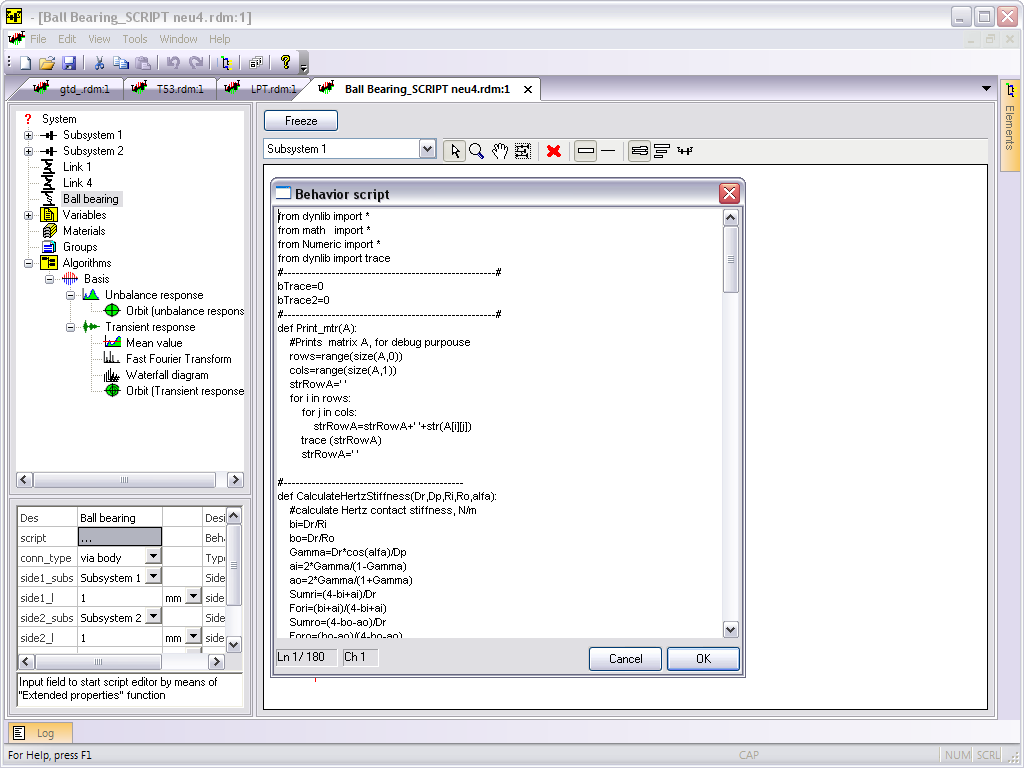
- Large variety of standard linear and non-linear elements for modeling of complex rotor configurations
- High speed of computations
- Automatic time stepping strategy of numerical integration
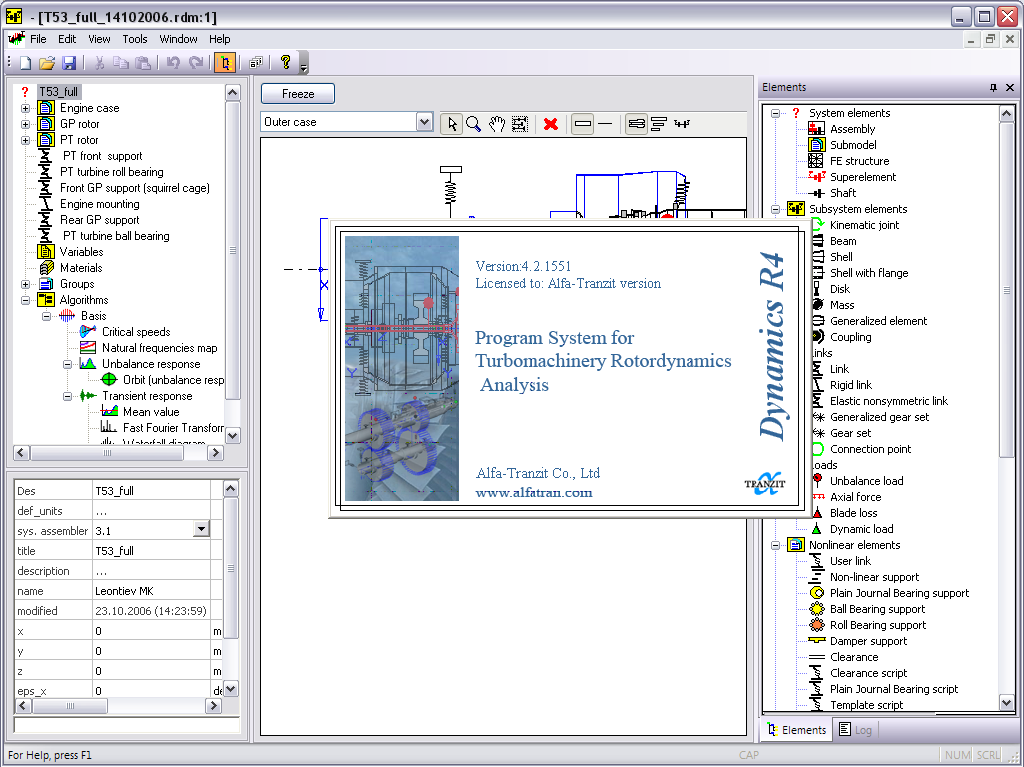
- Multiple ways of results visualizations
- Opportunity for users to create new nonlinear elements on the basis of user's algorithms and math models and integrate them into DYNAMICS R4 analyses schemes
- Opportunity to create one's own material database
- User-defined forms of protocols and reports on the basis of model data and computed results
- Developed system of information, including help functions and error reports
- More than 30 examples of models and solutions from different publications - papers, manuals, and textbooks.
- Import of models from DYNAMICS R3.1 program system
- Multi-language interface
Functional Capacity
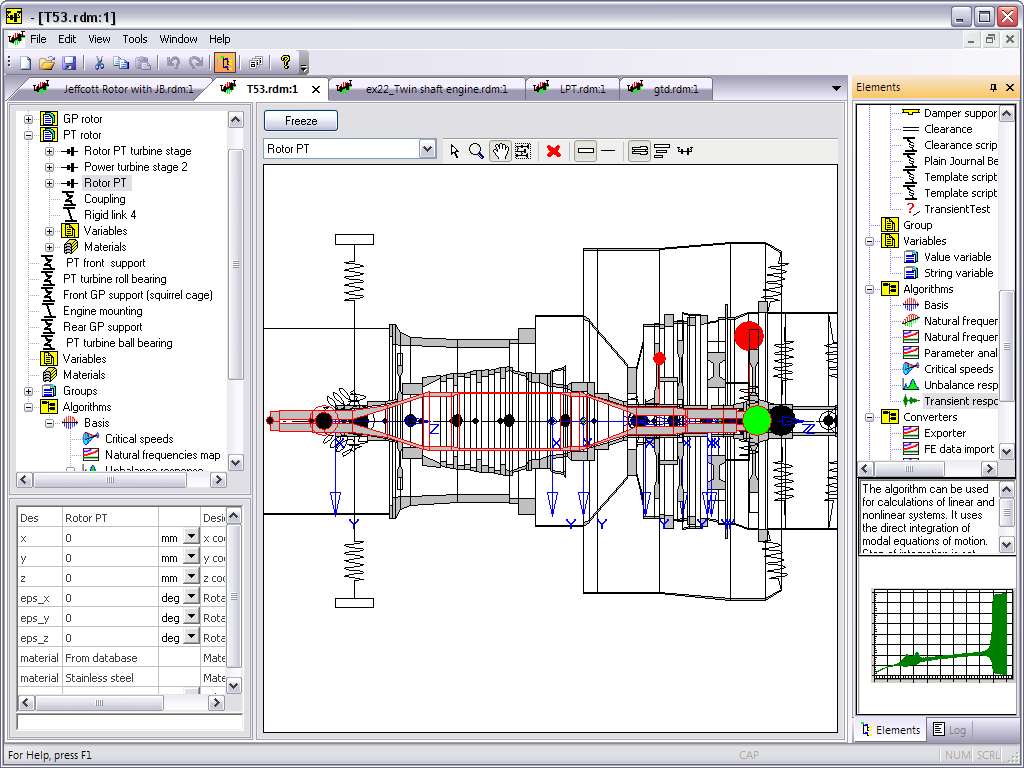
- Modeling of multi-shaft rotor structures
- Unlimited number of shafts and cases
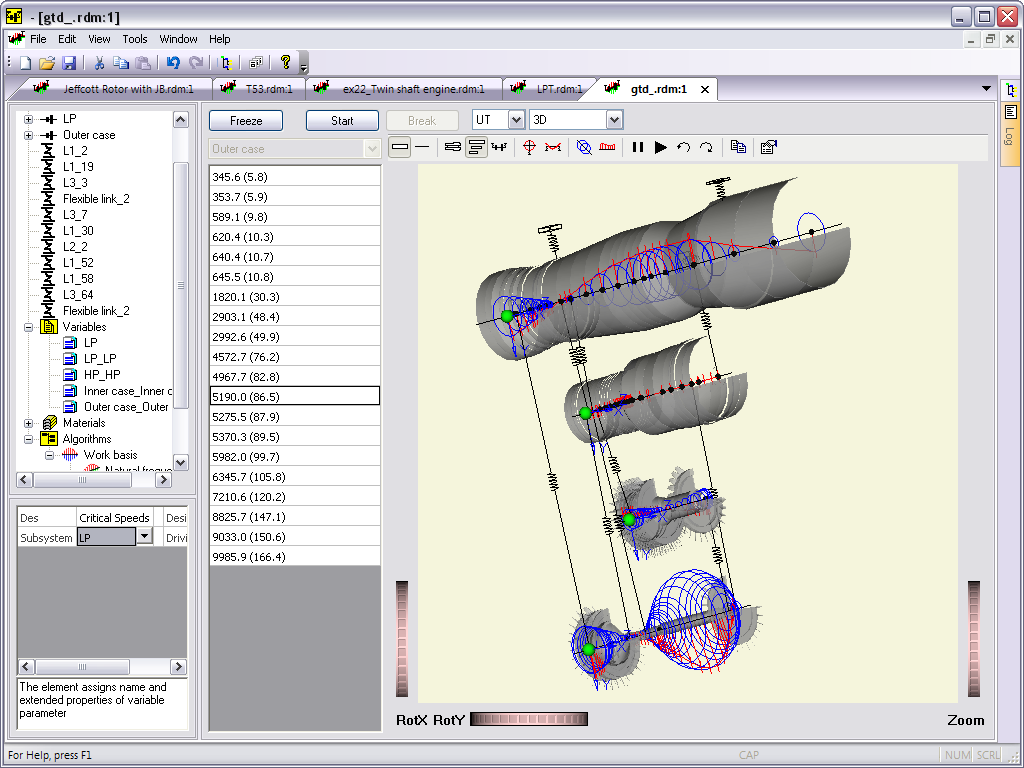
- Spatial location of subsystems (free orientation of spin axes) - coaxial, nonaligned and crossing
- Joint lateral, axial and torsional vibrations of multi-shaft rotor structures
- Anisotropic elements
- Real rotation speeds of rotors in multi-shaft rotor system, including opposite ones
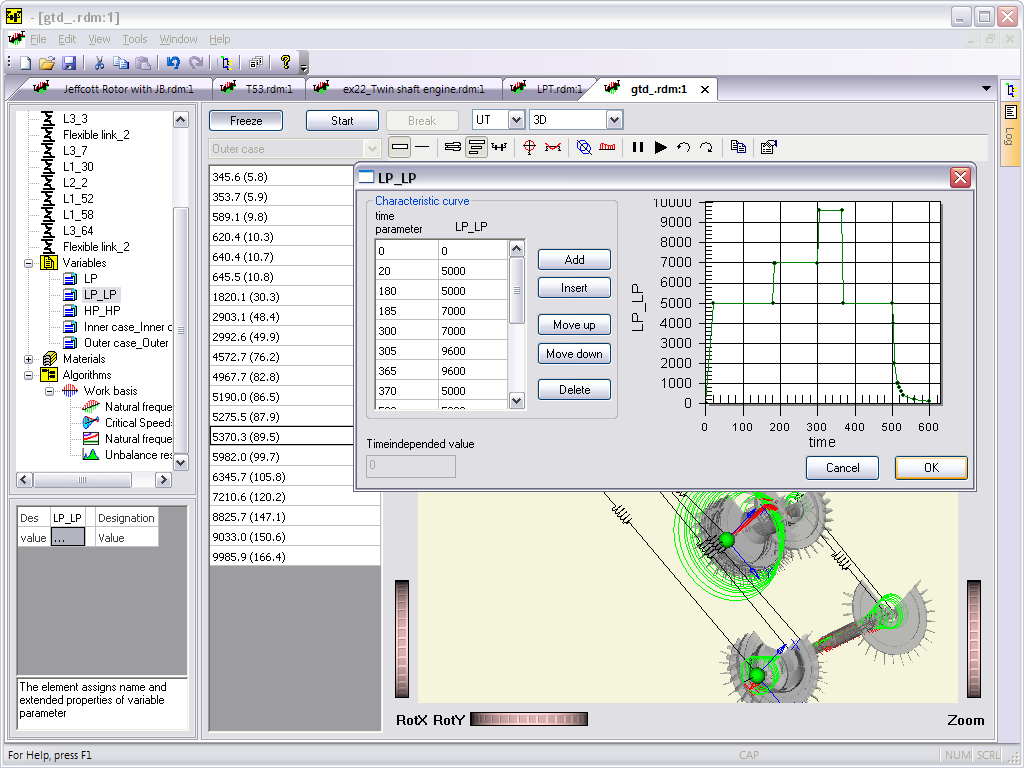
- Parametric analysis - different user-defined laws of variation of model inertia, stiffness, damping, loads and etc.
- Different stationary and non-stationary loads - unbalances, harmonic loads, periodical loads, impulse loads, arbitrary loads, etc
- Aerodynamical loads
- Computation of rotor system with weight and static loads
- Opportunity to compute multi-shaft systems with different gearing connections
- Modeling of dynamical system parts by super elements generated by component mode synthesis in FEM programs (NASTRAN, ABACUS, ANSYS, etc)
- Modelling of multi-shaft systems with any kind of gears(helical, bevel, etc.)
General Problems of Linear Dynamics
- Natural frequencies and mode shapes for lateral, axial and torsional vibrations of non-rotating and undamped multi-shaft rotor system
- Damped natural frequencies and mode shapes of joint lateral, axial and torsional vibrations of rotating rotor system
- Critical speeds
- Natural frequencies maps
- Critical speeds maps
- Kinetic and potential energy distribution through a rotor model elements for any mode shape
- Stability map, rotor instability thresholds
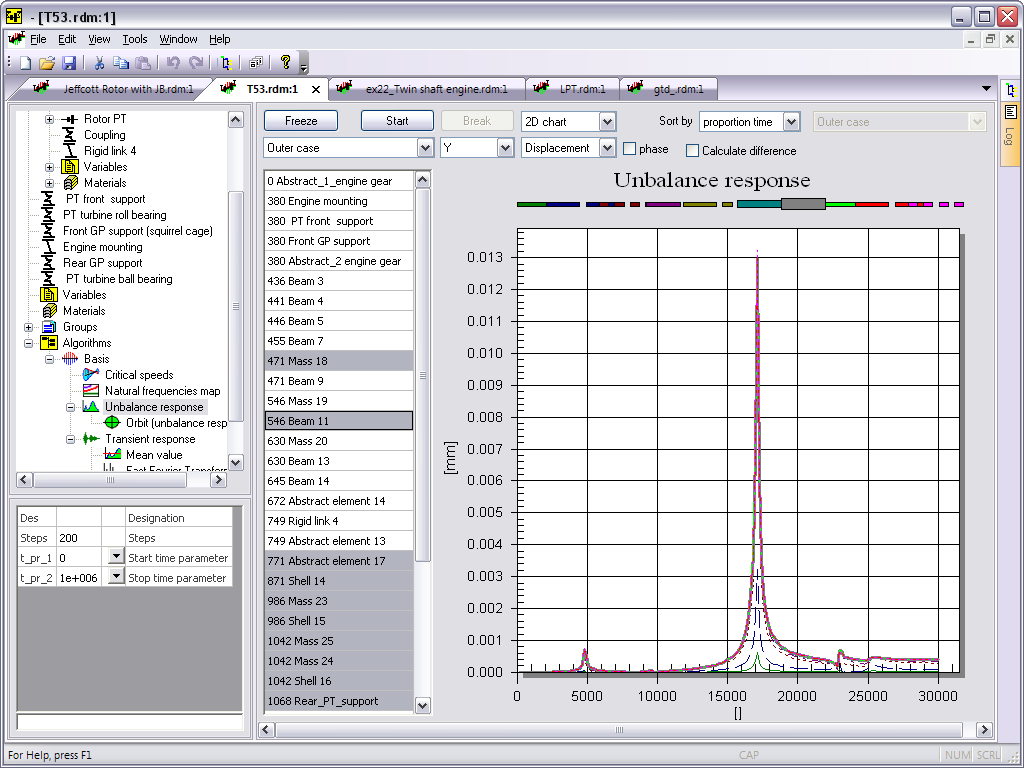
- Unbalance response
- Static deflection due to weight and arbitrary loads
General Problems of Non-linear Dynamics
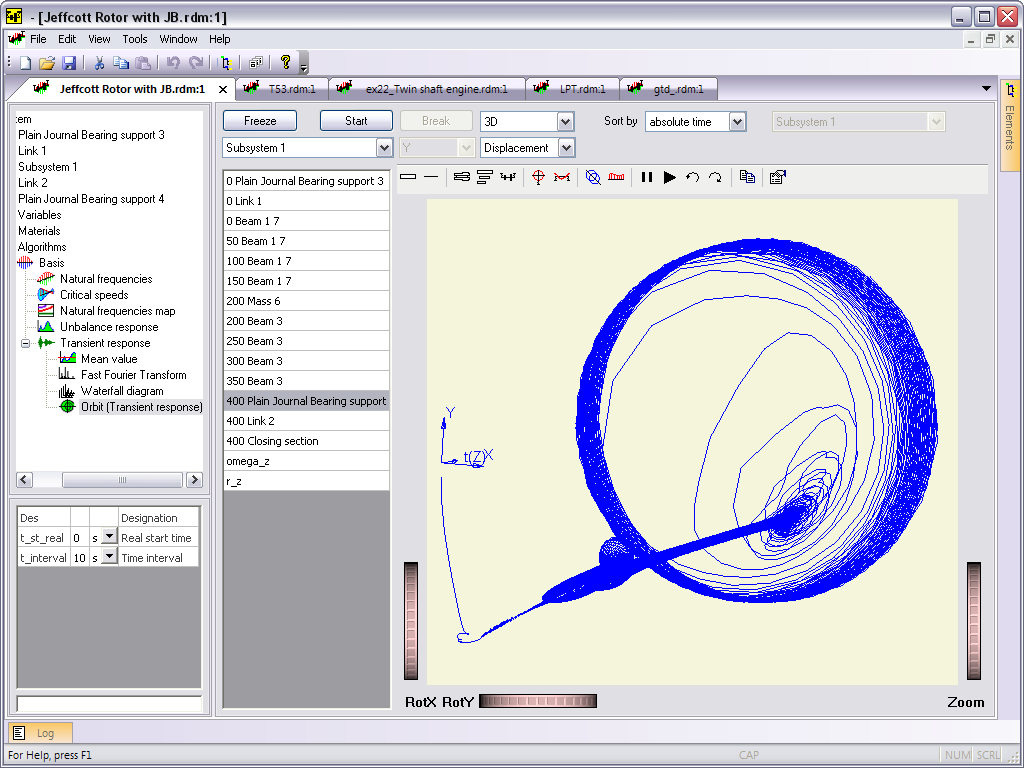
- Computation of rotor system with clearances, full and partial rubbing, external and internal friction, definition of instability thresholds, etc
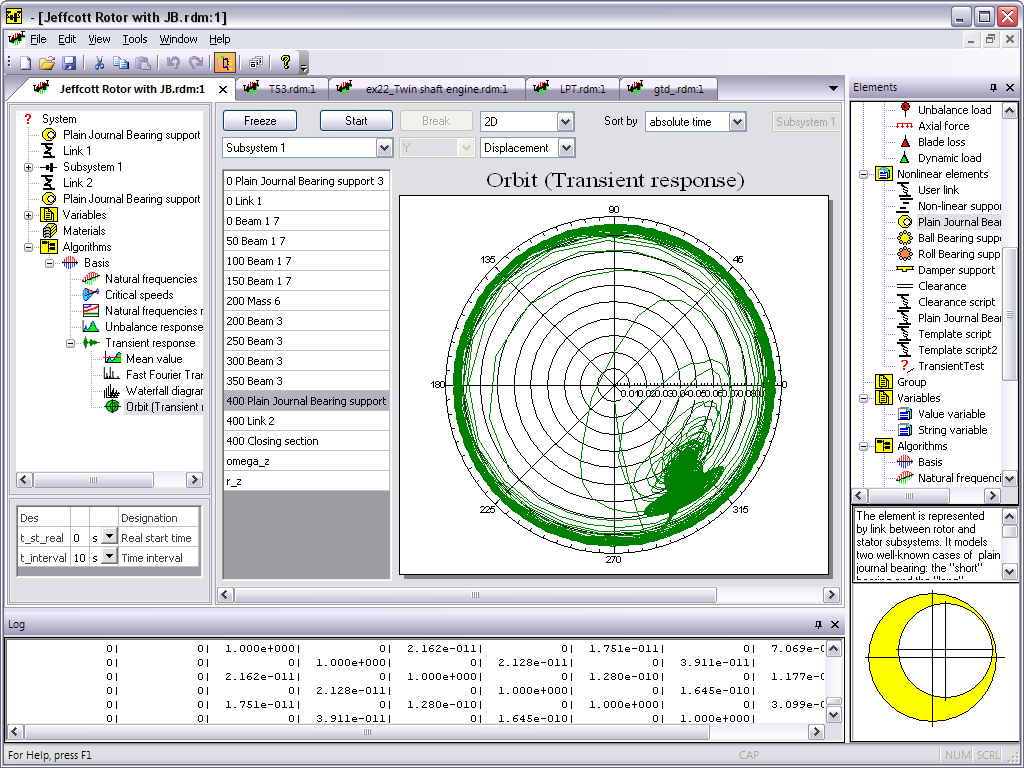
- Computation of rotor system with journal bearings of different kinds
- Computation of rotor system with non-linear squeeze-film dampers of different kinds
- Computation of rotor system with non-linear rolling bearings
User interface
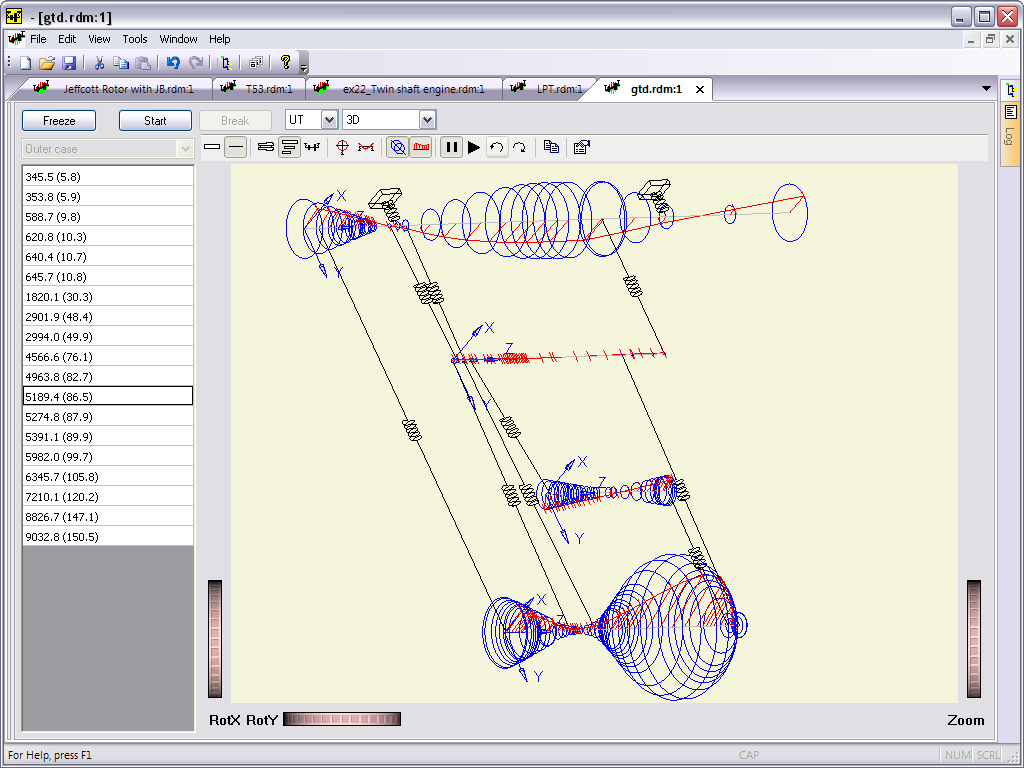
- 2D and 3D visualization of rotor models
- Exchangeable groups of modeling elements or data for alternative calculations within the one dynamical model
- Continuous animation
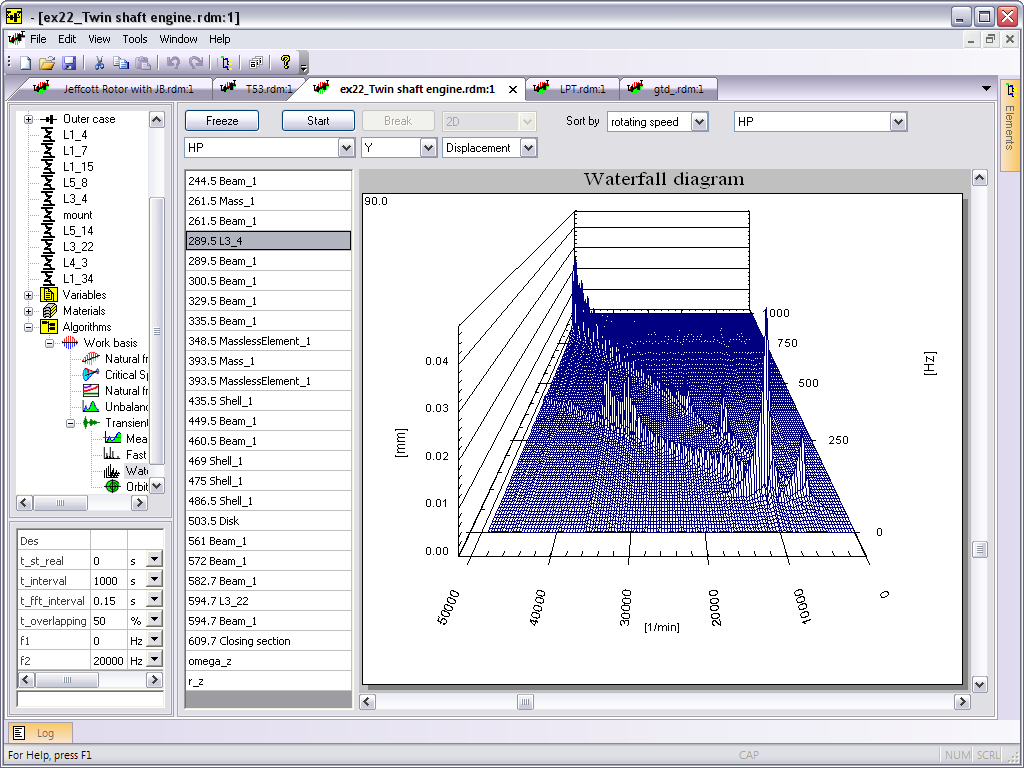
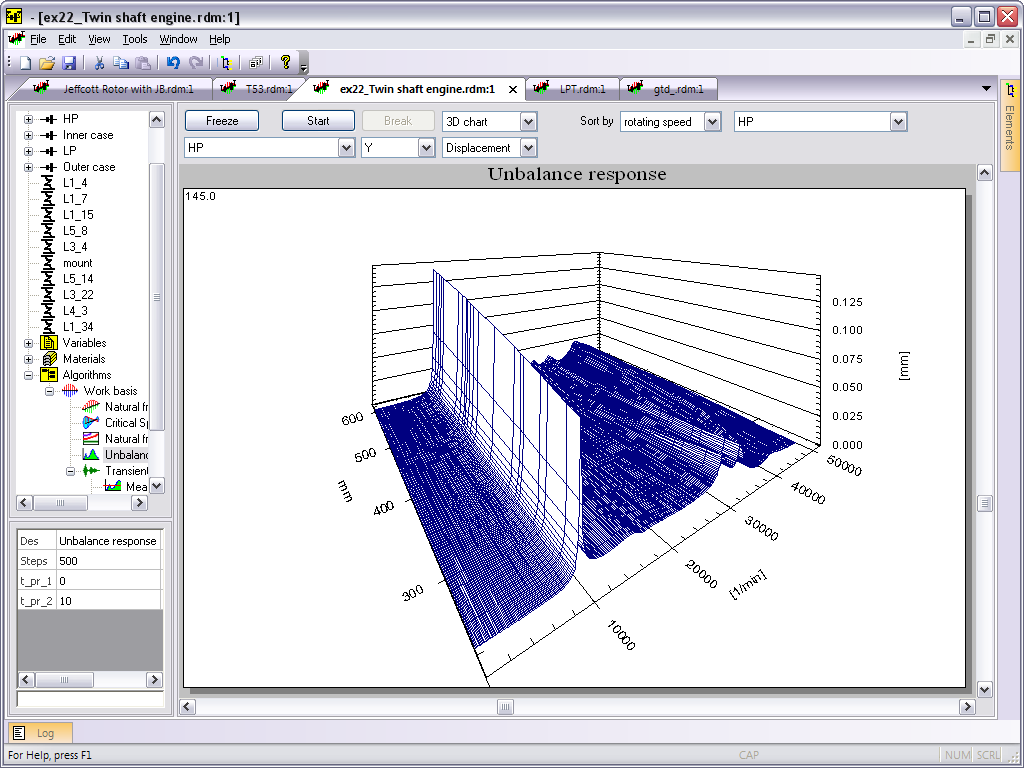
- Different ways of results visualization - time behavior plots, motion orbit plots after transient analysis, frequency response curves, FFT spectra, waterfall (cascade) plots, mean-square plots, peak-to-peak plots, amplitude envelopes and etc.
- Different output parameters - displacements, phases, velocities, accelerations, forces, moments
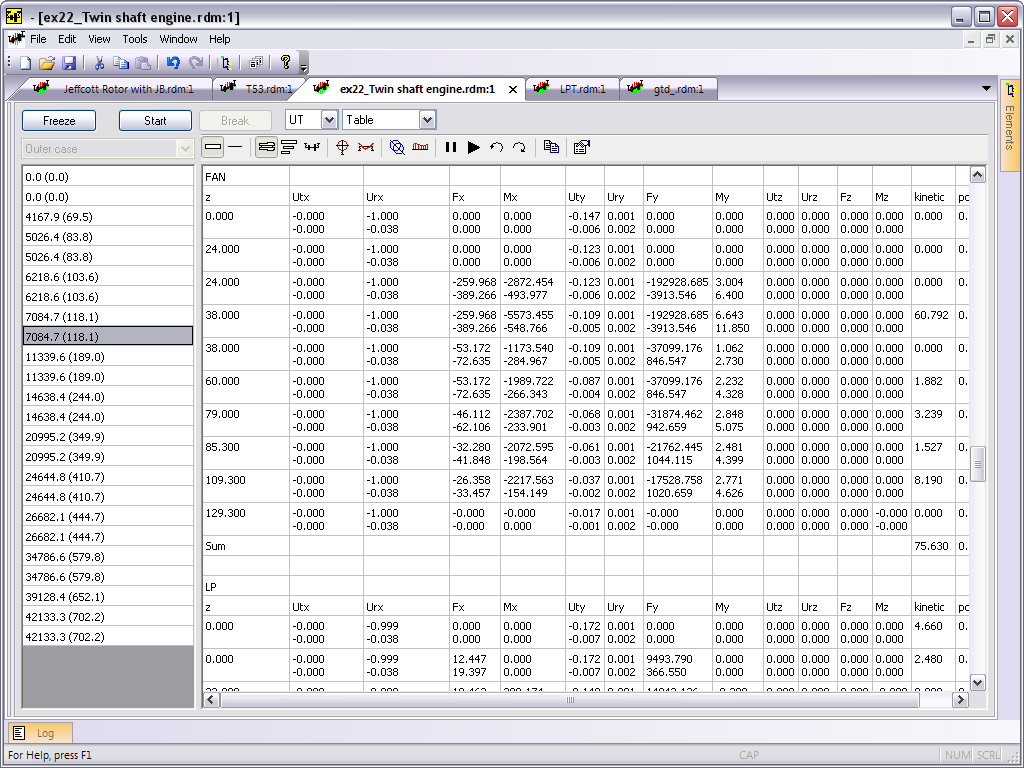
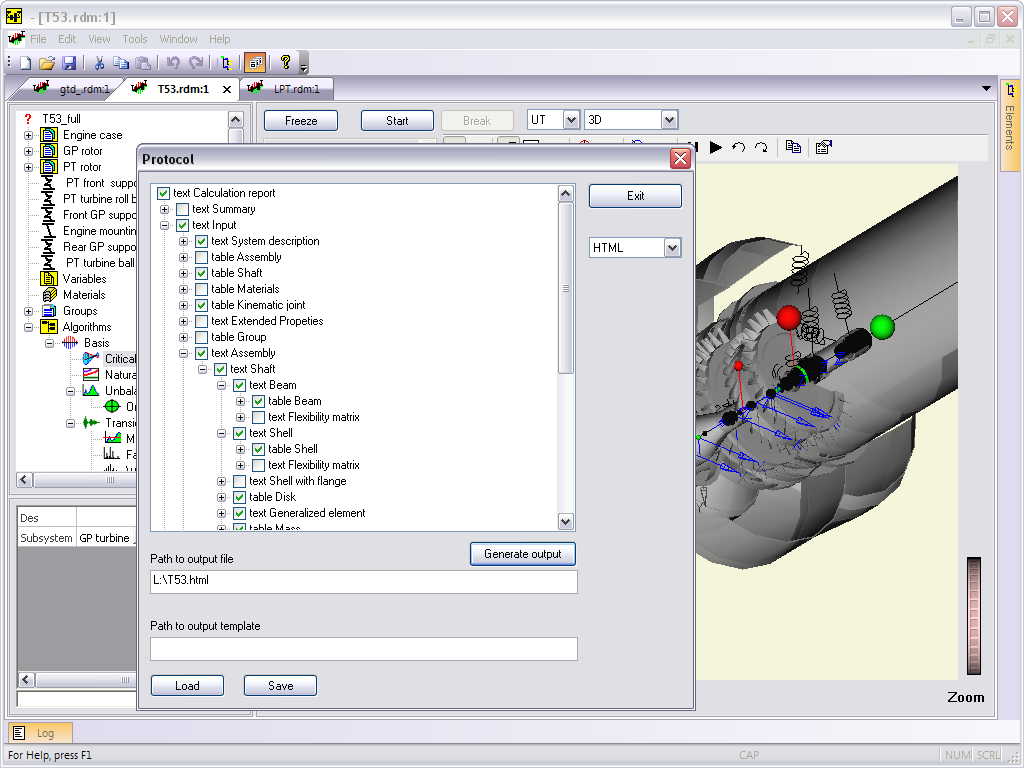
- Different output data protocols
- 2D and 3D output results graphics
|
|
 ROTOR DYNAMICS OF TURBOMACHINERY
 Broshure Dynamics R4[pdf]ENG